
Planning an event in Chicago often feels exciting and stressful at the same time, and for most people, it’s usually both. That tension shows up quickly once food comes up. Catering is almost always the first big question. How much will it cost in 2026? What even counts as fair pricing? And how do you pick a caterer who brings good flavor and reliable service that guests actually enjoy, not just put up with? If those questions sound familiar, you’re probably in the right place.
This catering pricing guide has one clear goal: help real people plan real events. It’s not written for industry pros or sales teams. Couples planning weddings, families putting together birthdays, holidays, or milestone celebrations, and event planners booking corporate gatherings should all find it useful. And if you’re looking for clear numbers and honest explanations around cultural food that feels personal, often tied to family or heritage, like Puerto Rican dishes, you’re in the right spot.
Here’s what surprises many people. Chicago is one of the most expensive catering markets in the country, and quotes reflect that fast. Prices usually land well above the national average. Labor and service fees can add up quicker than expected, especially once menus, staffing, and timelines are set. This guide breaks those details down in plain language, covering wedding catering, corporate and private events, and where Puerto Rican catering fits into today’s menus, more often than people think.
Along the way, it explains what drives pricing and how to plan a realistic budget. Practical things that matter. It also points out common missteps that often push totals higher near the end of planning, when choices feel rushed and budgets start to slip.
Why Chicago Catering Costs More Than Most Cities
Chicago weddings and events often come with higher catering bills, and the reasons are usually pretty practical. Industry surveys like The Knot, which many people reference for general pricing, put the average wedding catering cost in Chicago at $13,820, with a common range from $6,095 to $17,135. That number can feel like a shock at first, most couples probably pause when they see it. But once you look at how catering works in the city, the pricing often starts to make sense sooner than expected.
One of the biggest cost drivers is labor. Staffing and venue rules push labor costs higher, and it adds up fast. Chicago has higher minimum wages, union requirements come up often, and many venues require licensed, insured, full‑service caterers. That means you’re rarely paying for simple drop‑off food. Instead, you’re covering chefs, servers, bartenders, and setup crews, often for longer shifts.
Guest expectations also play a role. Guests at Chicago weddings usually expect fresh food, bold flavors, and smooth service, especially at more formal events. Basic buffet setups often don’t cut it. In my experience, expectations influence pricing more than couples expect.
Per‑person catering often falls between $85 and $135+ per guest. That may include food and basic service, but rentals, bar service, and extra staff are usually separate, and they add up quickly. Catering often takes 20, 30% of a wedding budget, and once alcohol and rentals are included, it can climb past 50%, especially for events like a 150‑guest wedding where staffing alone makes a big difference.
Wedding Catering Pricing in 2026: What Couples Should Expect
Wedding catering is often one of the most personal parts of the day and usually one of the most remembered. Long after the music fades and the flowers are gone, guests still talk about the food. In 2026, couples in Chicago are moving away from one-size-fits-all banquet menus and choosing meals that feel personal, meaningful, and connected to culture or family history. That shift makes sense here. Food tends to leave lasting memories when it feels familiar and thoughtfully chosen.
So what does pricing look like right now? In Chicago, couples are usually seeing clear pricing tiers. Buffet-style service often falls between $85 and $105 per guest. Family-style service is commonly priced from $95 to $120 per guest, depending on menu choices and staffing. Plated dinners usually start around $115 per guest and can reach $135 or more when menus become more detailed. Larger menus often mean more staff behind the scenes.
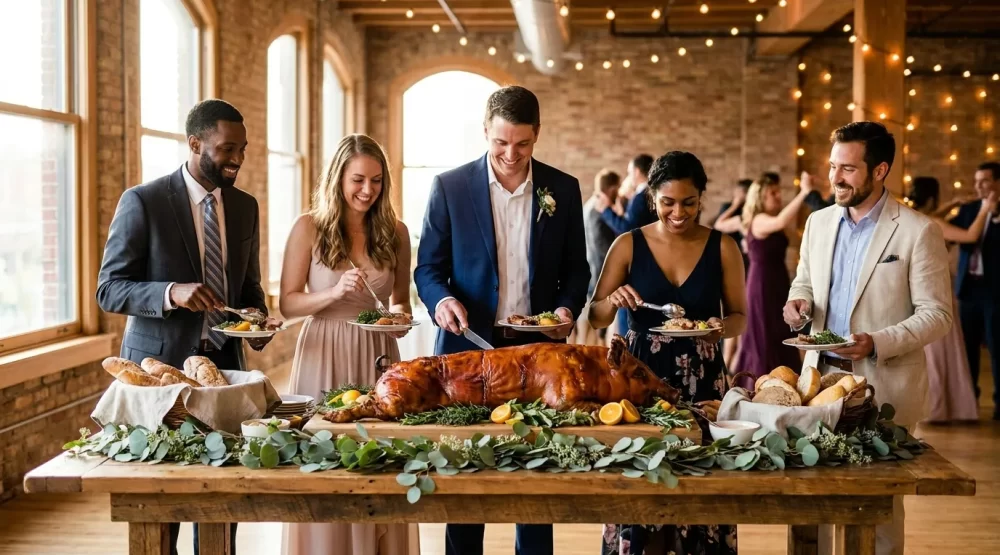
Puerto Rican wedding catering naturally works well with family-style service, since dishes like pernil, arroz con gandules, and maduros are meant to be shared. Guests pass plates, conversations last longer, and the room often feels warmer and more relaxed. This style works well for both small weddings and large celebrations. Comfort often matters more than formality.
One detail that catches couples off guard is added costs. Staffing and service charges, rentals like chafing dishes or linens, setup and breakdown time, and tastings or menu changes can add up faster than expected. Paying attention to these details helps avoid surprises.
For a deeper look at wedding-specific pricing, this guide breaks it down: catering for weddings in Chicago in 2026.
Corporate Event Catering vs. Private Party Pricing
Corporate catering and private party catering can look similar at first glance, but expectations usually send them down different paths. Corporate events care most about timing and presentation. Schedules are often tight, sometimes extremely tight, and food needs to arrive exactly when planned, not a few minutes late. Private parties are usually more relaxed on purpose. They focus on comfort, family traditions, and making sure there’s plenty to eat so guests leave full, even if everything isn’t perfectly styled.
Pricing in Chicago reflects those differences. The base numbers are fairly steady, but how they’re used depends on the type of event.
- Lunch meetings, drop-off service, or full-service corporate dinners: $35 to $120 per person, depending on service level and setup, with staffing and rentals often adding to the total
- Holiday events or client-facing gatherings: $85 to $130 per person, especially when presentation and staffing matter most, such as plated service with exact timing
Private parties, birthdays, anniversaries, family reunions, often use wedding-style pricing when full service is involved. A whole pig roast or lechon asado usually becomes the main focus, not just another item. It shapes how guests eat and move around, so the food sets the tone for the whole event.
Guest count is where problems often come up. Families tend to invite more people than expected, which affects food amounts, staffing, and equipment like tables and chafers. Locking in numbers early helps, while leaving some room in the budget covers surprises.
Event length also matters. Longer parties need food that truly fills people up. Puerto Rican food works well because it’s hearty, familiar, and made to feed groups generously.
What Goes Into Catering Prices Beyond the Food
Many people think catering prices are mostly about the food. That makes sense, and the author agrees up to a point, but food is usually just one part of the total. It’s only one slice of the cost. When the other expenses are explained early, planning often feels calmer and surprise fees are easier to avoid. Fewer last‑minute questions usually lead to less stress and better choices.
In 2026, several factors regularly shape pricing:
- Staffing: Chefs, servers, event captains, and bartenders all have specific jobs. As guest counts grow or service styles change, staffing needs often increase, and even small shifts can add up.
- Equipment: Roasting boxes for whole pigs, hot holding units, and carving stations don’t always get noticed, but they’re needed for smooth service.
- Logistics: Travel time, parking limits, load‑in rules, and venue restrictions can quietly add labor hours. These often come up once planning is underway.
- Service level: Drop‑off costs less because it needs very little support. Buffet, family‑style, or plated meals take more coordination and staff.
Chicago venues are known for tight schedules and specific loading dock rules. Caterers who know the city usually plan for this. Professional catering often costs more, but it can lower day‑of pressure, especially during setup and service. That tradeoff is usually the reason people choose it.
Sustainability and sourcing matter more now. Clients often ask where the pork comes from, how it’s prepared, and what happens to leftovers. Clear answers build confidence, and caterers who explain their process often earn more trust, in the author’s view.
Puerto Rican Catering: Culture, Flavor, and Value
Puerto Rican catering is usually about more than just taste. It connects food with culture, long‑held traditions, and the familiar joy of getting everyone around one table (often loud and crowded, in a good way). In 2026, more Chicago clients want meals that feel meaningful, food where you can explain where a dish comes from and why it’s made that way. Each menu has a real story behind it, which often makes shared meals feel more personal (and honestly, more fun).
Lechon and pernil are good examples. These dishes are slow‑roasted, boldly seasoned, and cooked with care. That time and experience matter, and they affect value in a very practical way. A whole pig roast can feed a large group efficiently, which helps keep budgets in check for bigger events. Simple math, big payoff, especially with long guest lists.
Puerto Rican menus are flexible and easy to adapt, including:
Food that adjusts without losing its roots.
- Gluten‑free options
- Vegetarian sides (often built around beans or plantains)
- Dairy‑free dishes
- Mild or bold spice levels, depending on the crowd
This flexibility makes mixed guest lists easier to serve without juggling multiple menus. If you’re curious about the roots behind these dishes, we covered it here in this guide to Puerto Rican pernil history and preparation.
Choosing a caterer who understands the culture usually helps the food feel genuine and rooted, not copied.
How to Plan a Smart Catering Budget for 2026
The first thing people usually notice is the food, especially when it also works as a centerpiece. For large events, whole pig roast catering can offer solid value per guest while still feeling special. It gives the room a clear focal point, and you often don’t need several protein options, which usually keeps planning simpler and more manageable.
A smart catering budget often starts with honesty (the slightly uncomfortable part). Be clear about what you can actually spend and what matters more for your event, food quality or service, for example. Once that’s clear, choices tend to feel easier and don’t spiral later. There’s less second‑guessing and more confidence, which most people appreciate.
Helpful planning tips (the practical stuff):
- Start with a realistic per‑person range, not the lowest number you find online, which is often misleading
- Ask what’s included, since extras can add up fast, really fast in many cases
- Staffing matters, so confirm service time and how many people will actually be on site, not just what’s quoted
- Think about adding a 10 percent buffer for small changes, just in case
If some guidance would help, a Chicago‑based team like fancypig.com offers Puerto Rican catering with a focus on whole pig roasts and weddings, so the process doesn’t feel like guesswork.
The Bottom Line for Chicago Catering in 2026
Catering in Chicago is usually an investment, and in 2026 that shows up clearly in the pricing. Higher labor costs, stronger guest expectations, more focus on cultural authenticity, and steady demand across weddings, corporate events, and private parties all factor in, which most people have already noticed. There are rarely shortcuts here, just real reasons shaping real budgets in most cases.
Wedding catering often lands between $85 and $135 or more per guest. Corporate and private events can vary a lot depending on service style and menu choices. Some keep it simple, others go big, and it truly depends. Puerto Rican catering is known for bold flavors and deep tradition, works well for large groups, and keeps classic dishes front and center, which is why it stays so popular.
The best approach is usually learning as you go. Asking questions helps, and taking time makes the pricing easier to understand. What actually drives the cost? When catering is done right, with shared plates and familiar flavors, it feeds people and helps them connect, so everyone leaves happy and full.
