
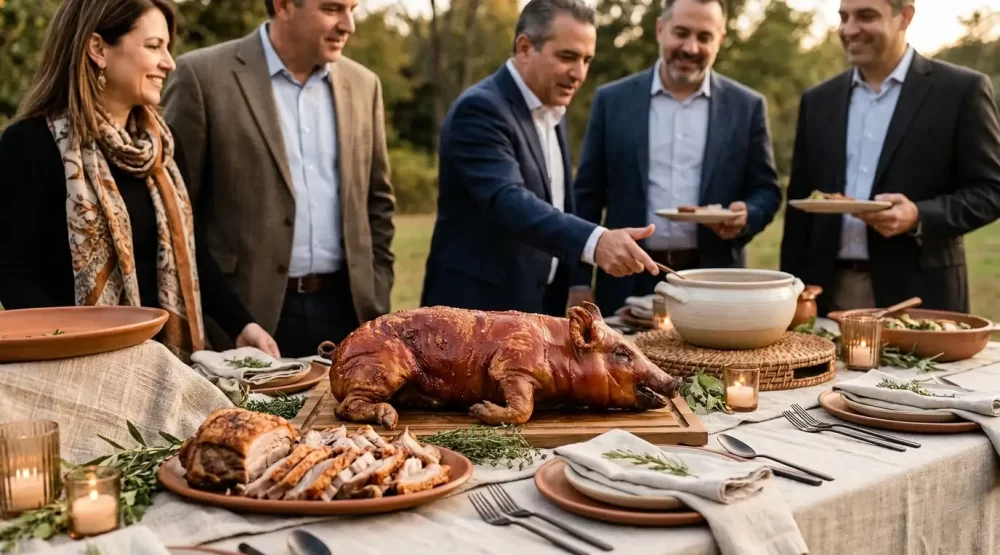
If you’re planning a wedding, birthday, office event, or family party, one big question comes up fast: how much lechon do you actually need? This guide is here to help with portions, whole hog roast yield, and the hosting worries that usually matter most, running out of food or ordering way too much, which happens more often than people think.
It’s made for Chicago-area event planners, couples, corporate organizers, and families who want authentic Puerto Rican roast pork without having to guess. If you’ve searched for ‘lechon near me’ and still weren’t sure about serving sizes, this is the right place to start. It explains how to estimate cooked pork per person, how whole pig size turns into servings, when adding extra makes sense, and how things change with buffets, weddings, or menus that include other dishes, since that often affects portions more than expected.
You’ll also see why lechon is more than just a meat order. It really becomes the centerpiece of the table and gives guests something to gather around. For many families, it’s also connected to cultural tradition. When it’s planned well, Puerto Rican roast pork brings flavor, warmth, and a real sense of occasion in a way standard catering often can’t match, with food people get excited about, a presentation that gets attention, and a meal that feels more personal.
Before You Start
Before you calculate your order, gather these details first, it really makes things easier:
- Your confirmed guest count
- The type of event: wedding, corporate lunch, birthday, holiday, family celebration, or something similar
- Your service style: plated, buffet, family-style, or another setup
- Whether lechon is the main dish or just one of several proteins
- Your guest mix, including adults, teens, and small children
- Whether you expect hearty eaters or guests likely to go back for seconds
- Your event timeline, venue rules, and any carving setup needs
Tip: Don’t base your plan on invitations sent. Use confirmed RSVPs instead, then add a buffer, since that is usually the safer way to go.
Step 1: Set Your Real Guest Count
Start with the number of people you honestly expect to feed, not the full list of everyone invited. That one step alone will likely stop a lot of portion mistakes. It sounds simple, but people miss it all the time.
For example:
- If 120 people are invited and 92 said yes, use 92 as your starting count.
- If 10 guests are still undecided, count them as part of your buffer instead of leaving them out.
- If many children are coming, remember they usually eat smaller portions than adults.
- If lechon is the main event, plan that part even more carefully, especially for larger groups.
A good rule is to add 5% to 10% extra food on top of your confirmed count. That gives you a little room for last-minute guests, extra-hungry relatives, or anyone who goes back for seconds. In most cases, that small buffer is what keeps you from running short.
This is especially useful for weddings and big family parties. In catering, even a small counting mistake can turn into a bigger food problem pretty fast. A difference of just 10 guests can mean several extra pounds of Puerto Rican roast pork, and that becomes obvious quickly.
For a corporate event, it helps to be more precise. Office lunches usually have tighter budgets, and serving time is often shorter too. There is less room for error, and that is often where ordering too much hurts most.
In 2025, the average corporate catering order was $420 per event, and the average corporate lunch cost was around $20 per person. So ordering too much can affect the budget fast. And that can add up quickly, probably faster than expected.
A common mistake is counting every guest the same way. A party with 40 adults and 15 children will not need the same amount of food as 55 adults. Still, people often estimate it that way, which can leave them with way too much food or not nearly enough.
Step 2: Choose the Right Portion Per Person
Next, estimate how much cooked pork each guest is likely to eat. That depends a lot on how it’s served, and that can vary quite a bit from one event to another.
For most events, these are the safest numbers to use:
- Plated meal: plan 10 to 12 ounces of cooked pork per adult
- Buffet: plan 1/2 to 3/4 pound of meat per person
- If lechon is the main attraction: stay near the higher end
- If you are serving multiple proteins: lower lechon to about 4 ounces per person
This part matters because buffet guests usually take more than plated guests. Once people see crispy skin, juicy pork, or a carving station, many of them go back for seconds, and sometimes even thirds. That’s one reason barbecue-style menus are still so popular. In one recent industry survey, 50% of catering business owners said barbecue or grilled food was the most requested menu item.
If the menu also includes rice, beans, tostones, bread, salad, and another protein, you can usually cut the pork amount a little. In most cases, those sides help fill people up. But when the menu is built around a whole hog roast, it’s smarter to leave a little extra room instead of planning too tightly, especially if pork is the main reason people came.
One more thing to remember: if guests already know and love lechon, demand is often higher. Foods tied to family tradition usually lead people to serve themselves bigger portions than they would at a more standard banquet meal. That kind of familiarity often affects portion planning more than people expect.
Btw, we wrote about the heritage behind this dish here: Puerto Rican Pernil Guide: History, Tradition & Preparation.
Step 3: Convert Portions Into Total Meat Needed
Before you talk with your caterer about the whole pig size, first figure out your cooked meat target. The math is fairly simple.
Use this formula:
- Number of adult guests x portion size in ounces = total ounces needed
- Then divide the total ounces by 16 to get pounds
- Add a 5% to 10% cushion
If lechon is the main protein, which it often is, here are a few simple examples.
25 guests
- 25 x 10 ounces = 250 ounces
- 250 divided by 16 = about 15.6 pounds
- So with a little extra, which is usually a good idea here, plan on about 16 to 19 pounds cooked meat for your group.
50 guests
- 50 x 10 ounces = 500 ounces
- 500 divided by 16 = about 31.25 pounds
- So with a little buffer, you’ll usually want about 31 to 38 pounds of cooked meat in most cases
100 guests
- 100 x 10 ounces = 1,000 ounces
- 1,000 divided by 16 = 62.5 pounds
- With a buffer, plan for about 63 to 75 pounds of cooked meat
For 100 guests, that range is a good starting point, not a fixed rule. A wedding buffet will usually need more food than a plated corporate lunch, and a late-night party will probably need more than a daytime baby shower. In many cases, side dishes matter too, since they can fill people up faster than you might expect.
One common mistake is using only the cooked meat math when the purchase is actually a whole hog. Whole pig weight is not the same as edible yield, so those numbers should not be treated as equal.
Step 4: Match Cooked Meat Needs to Whole Hog Size
This is the part that often confuses first-time hosts, and that is totally normal. A whole pig includes bone, skin, fat, and cooking loss, so a 100-pound pig does not mean 100 pounds of meat ready to serve.
A practical whole hog roast guide usually looks like this:
- A 50 lb pig feeds about 10 people
- An 80 lb pig feeds about 15 people
- A 100 lb pig feeds about 20 people
- A 150 lb pig feeds 25+ people
Those numbers help with rough planning, especially early on. Still, the actual yield usually depends on how the pig is carved, how much is trimmed away, and whether guests want crispy skin with each serving. That is why checking the edible yield with the caterer matters so much in this situation.
If you’re searching for ‘lechon near me,’ one useful approach is to ask a very direct question: ‘How many guests will this pig feed as a main dish after carving?’ That will often give you a clearer answer than looking at pig weight alone.
Another detail worth knowing: if the event includes a display roast along with separate trays of carved meat, the service can feel more generous. It may also move faster, since guests can be served from trays instead of standing by the roast.
If the goal is to build a full menu around the roast, that was covered here: Puerto Rican Cuisine Catering Menu Planning, with ideas for pairing sides and choosing a service style.
Step 5: Adjust for Event Type, Service Style, and Guest Behavior
Once you know your base amount, adjust it to fit the kind of event you’re hosting, it’s usually a pretty simple next step. This often makes the event feel more natural.
Weddings
Weddings usually call for a bit more. Guests often stay longer, drink more, and generally expect a full meal, which makes sense. In 2025, the average U.S. wedding catering cost reached $6,927 per event, and the average cost per person was around $80, including food and drinks.
Couples now often want menus that feel more memorable, not just the usual banquet plates. Lechon works especially well in this setting because it feels special and has strong roots in tradition.
Corporate events
Corporate groups are often easier to estimate when the service is just lunch and portions stay controlled, which is usually the easy part. It’s pretty straightforward. But for a holiday party or an open-house setup, there’s usually a lot more movement around the room, and people often go back to the buffet for seconds.
Bill Blackburn said, “U.S. companies are spending more on workplace food than ever. Sixty percent of corporate food buyers plan to increase their catering budgets in 2025, with the average catering order now reaching $420 per event.” That shows employers are more willing to spend on food people will actually remember.
Family parties and holidays
Private parties are still one of the biggest catering categories. In one survey, 54.4% of catering businesses said private parties were the most popular event type they served. That makes sense. Family events are often where people want food that feels meaningful, comforting, and tied to tradition in a familiar way. It’s usually the kind of food they know from home, holidays, and bigger family gatherings.
One common mistake is using the same portion size for a 1-hour office lunch and a 6-hour wedding reception, which usually doesn’t work.
Step 6: Talk to Your Caterer About Yield, Setup, and Logistics
Before you lock in the order, ask direct questions. It’s one of the easiest ways to avoid surprises on the day of the event, and that can make a real difference.
Ask your caterer:
- How many guests will the lechon feed as a main dish?
- Is that number based on buffet or plated service?
- Does the estimate include crispy skin portions?
- Will the pig be carved on-site or delivered carved?
- Are sides included, and do they change portion planning?
- Do venue rules affect roasting, carving, or holding equipment?
- What happens if the guest count changes one week before the event?
In busy event markets, these details often matter even more. The global catering services market was valued at USD 76.66 billion in 2025 and is projected to reach USD 82.66 billion in 2026. It’s a big industry. As catering keeps growing, hosts usually expect smoother service, clearer communication, and menus that fit the event better, which can make planning less stressful.
If you want a Chicago caterer focused on authentic Puerto Rican food and roast pig service, fancypig.com is a good place to start. It helps to work with a team that understands flavor and also knows event logistics, like carving setup, timing, and venue access. That part matters too.
Tip: Put your final headcount, service time, venue access rules, and side menu into one email. That gives the caterer a better chance of giving accurate portion advice, and you’ll likely get clearer answers faster.
How to Verify You Ordered the Right Amount
A good order will usually cover a few key things:
- Your caterer confirms the guest count and service style in writing
- Your meat estimate includes a 5% to 10% buffer
- You know if the number is based on cooked yield or whole pig weight
- Your side dishes fit the portion plan
- You’ve got a plan for leftovers (or extra trays) if needed
On event day, it’s pretty easy to tell when the amount was right. The buffet stays full instead of looking half-empty in the middle of service. Guests get crisp skin and tender pork, which is probably what they came for. There’s no last-minute rush for backup food while the line is still moving. You might even have a little left over, which is often better than running short before people are done eating.
Your Next Move for a Smooth Lechon Order
To work out how much lechon a party needs, pig size usually should not be the first thing you look at. Guest count, serving style, and whether lechon is the main dish give a much clearer starting point, especially when the roast pork is carrying most of the menu. From there, use simple portion math, add a small buffer, and confirm the edible yield with your caterer.
For quick planning, these numbers are useful:
- 10 to 12 ounces cooked pork per adult for plated meals
- 1/2 to 3/4 pound per person for buffet service
- 5% to 10% extra as a buffer
- Around 100 pounds of whole pig for about 20 people and 150 pounds for 25+, depending on yield
This framework usually helps protect the budget and makes sure guests leave full and happy. It is pretty simple once the basics are clear. For a wedding, office party, or family feast, a well-planned Puerto Rican roast pork order often leads to a meal people are still talking about after the plates are cleared.
